The concept of guerrilla warfare dates back to antiquity, with the Chinese strategist Sun Tzu first writing about irregular combat in his 6th-century-B.C. military treatise, The Art of War. Even before it traveled West with various tribes, Roman General Quintus Fabius Maximus Verrucosus employed unorthodox tactics against Hannibal’s army during the Second Punic War (218 to 201 B.C.), and those tactics continued to evolve in the centuries that followed, on a new continent, and eventually, during the American Revolution.
When small arms entered the battlefield, combat and military strategy became very regimented when organized armies engaged other organized armies — we could call it the Napoleonic era of combat. But when one or both sides of a conflict were somewhat “irregular,” that changed.
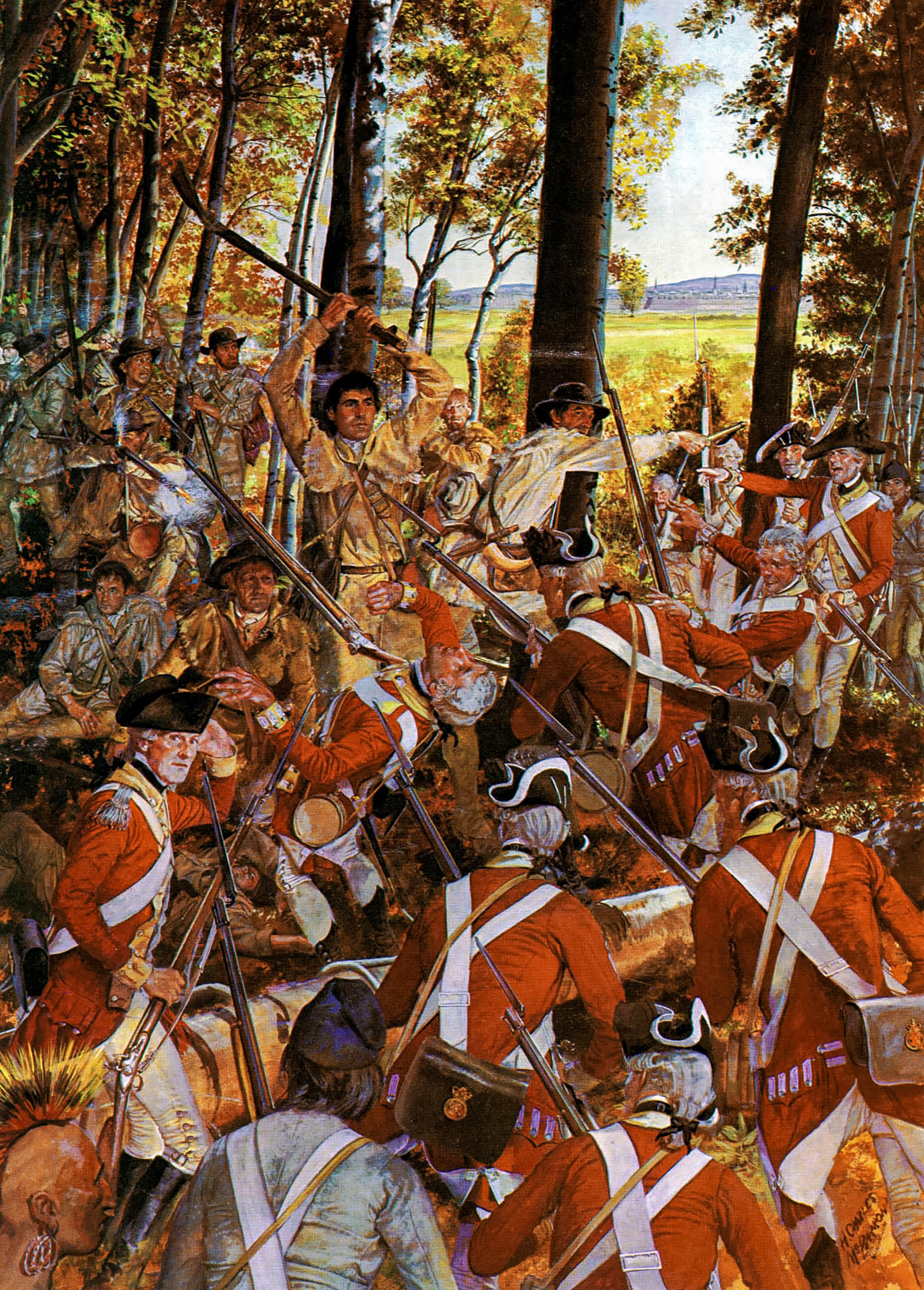
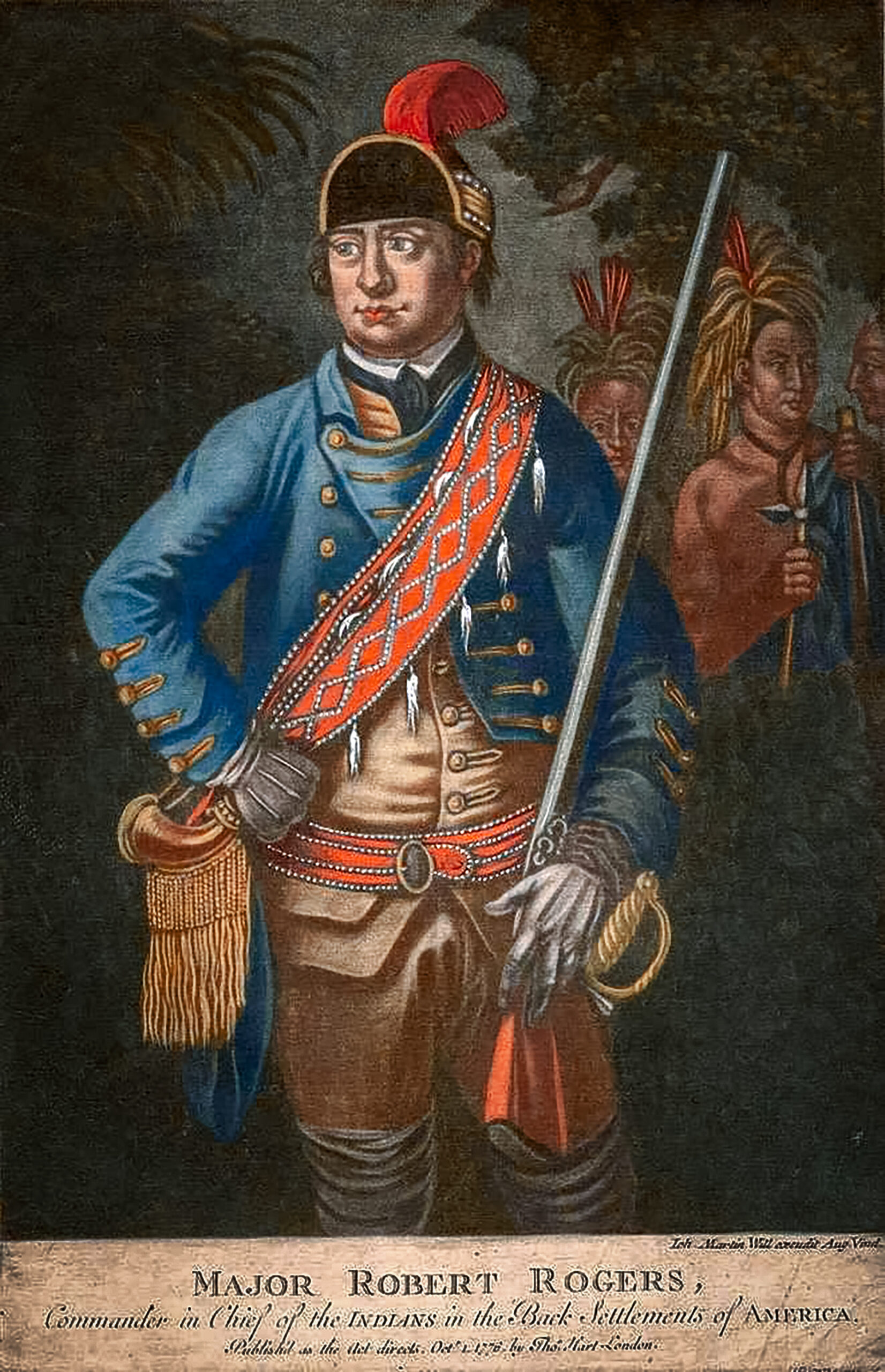
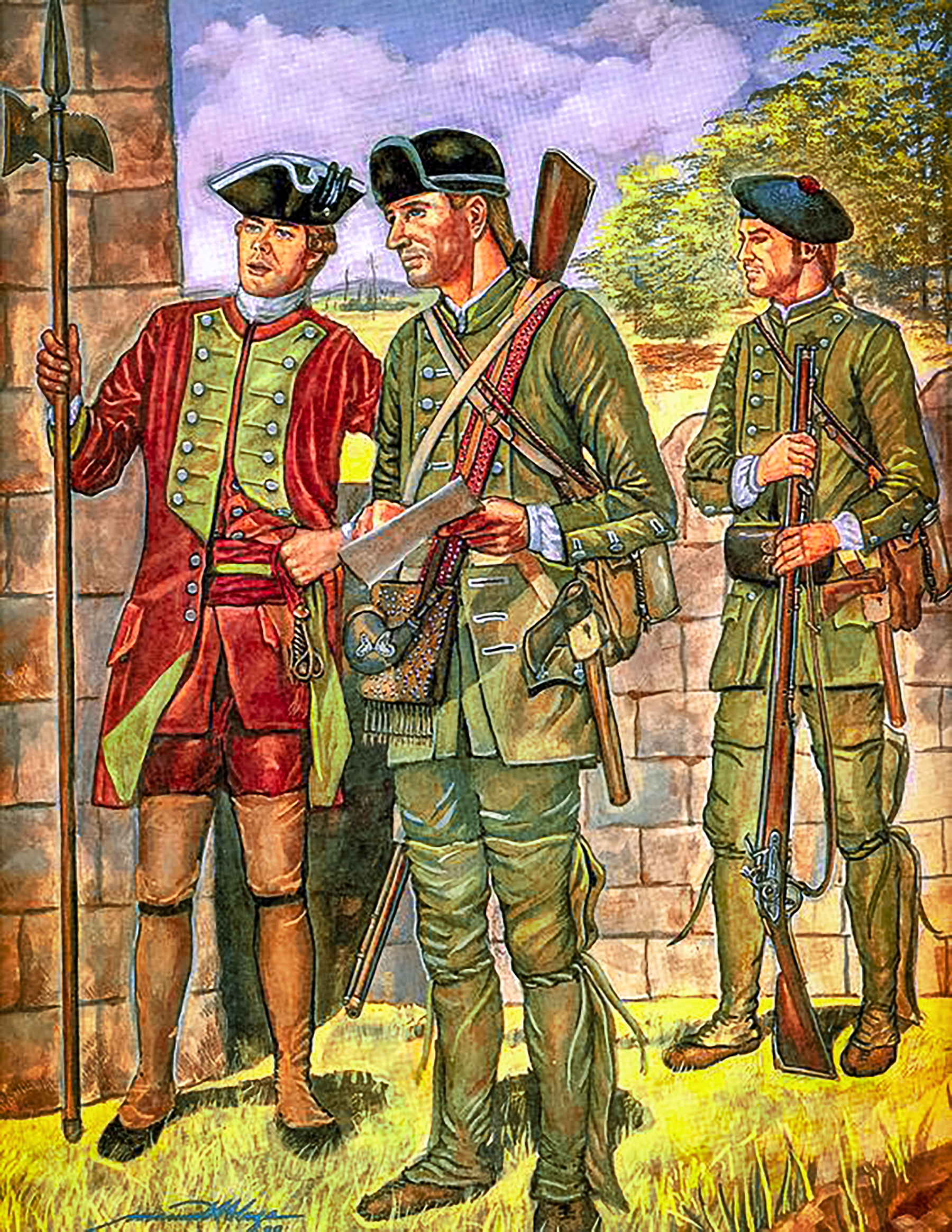
Guerrilla warfare, or a form of it, was widely used by both sides in the French and Indian Wars in the 1760s, notably by Robert Rogers, who raised and commanded “Rogers’ Rangers,” a group that carried out asymmetric warfare against the French.
Although Rogers fought for the British (after reportedly offering his services to General George Washington), many of his rangers served with the Continental Army’s rifle companies and later with ranger units composed of experienced frontiersmen.
The current U.S. Army Rangers, the British Army Ranger Regiment, and the Queen’s York Rangers (1st American Regiment) of the Canadian Army all trace their lineage to Rogers’ Rangers.
The American Revolution: A Guerrilla War From the Beginning
Although many of the most significant battles of the American Revolution were more conventionally fought, guerrilla tactics saw widespread use from the very beginning of the conflict, which includes hit-and-run tactics, ambushes, and acts of sabotage carried out by small groups that could hide easily, all designed to hamper a larger enemy force.
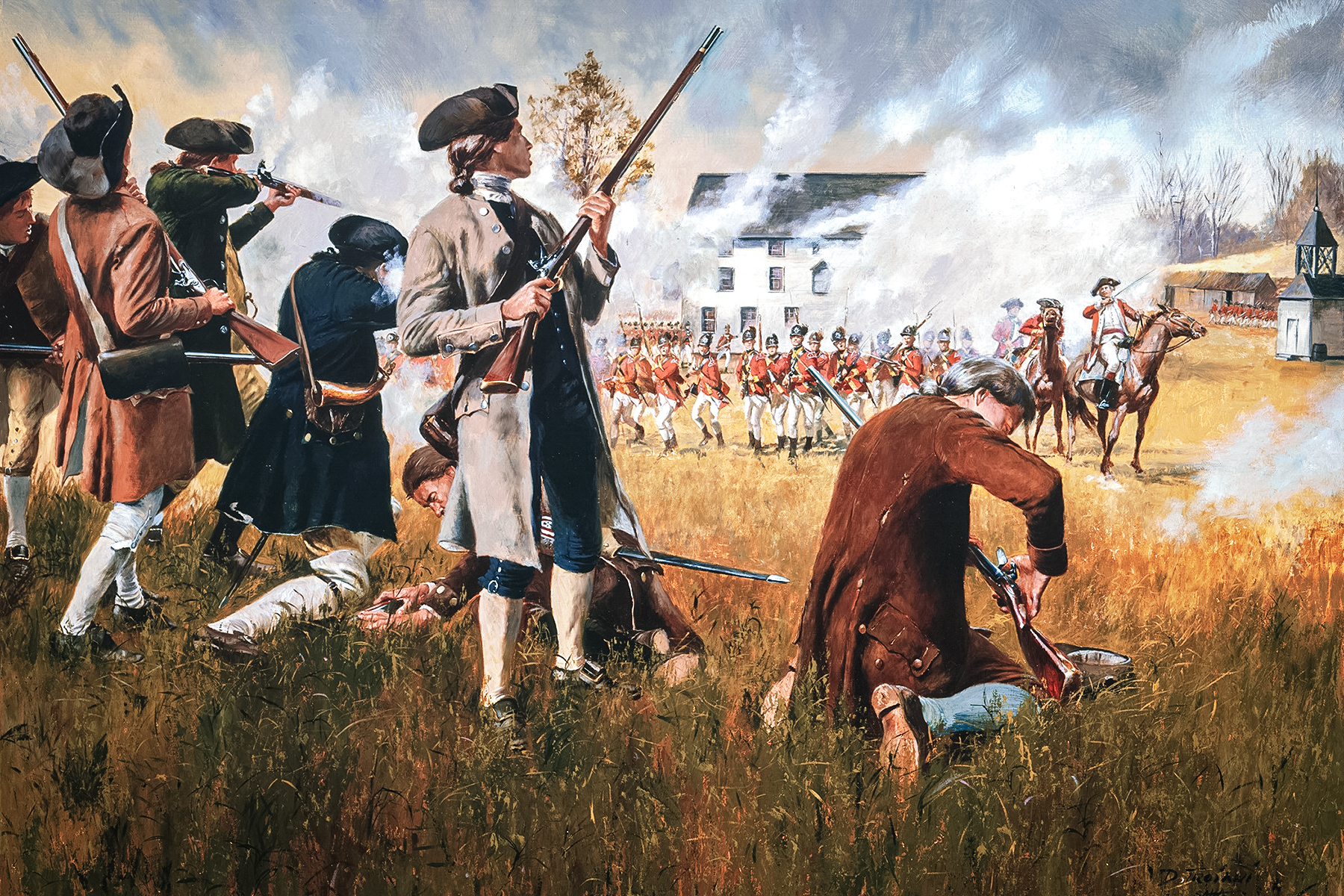
The opening fighting of the Battles of Lexington and Concord in April 1775 saw the American militia ambush and harass the British troops as they retreated to Boston. That included hit-and-run tactics, as well as the American militia forces firing from concealed positions behind walls, trees, and houses.
Such tactics may seem like part of regular warfare in the 21st century, but they were entirely unorthodox for the era. It resulted in frustration among the British soldiers, who were untrained to deal with the “scattered, irregular manner of fighting.” This ultimately contributed to the American victory.
John Stark: An Early American Guerrilla Fighter
An early American pioneer of guerrilla tactics was John Stark, who commanded the 1st New Hampshire Militia at the outbreak of the American Revolution.
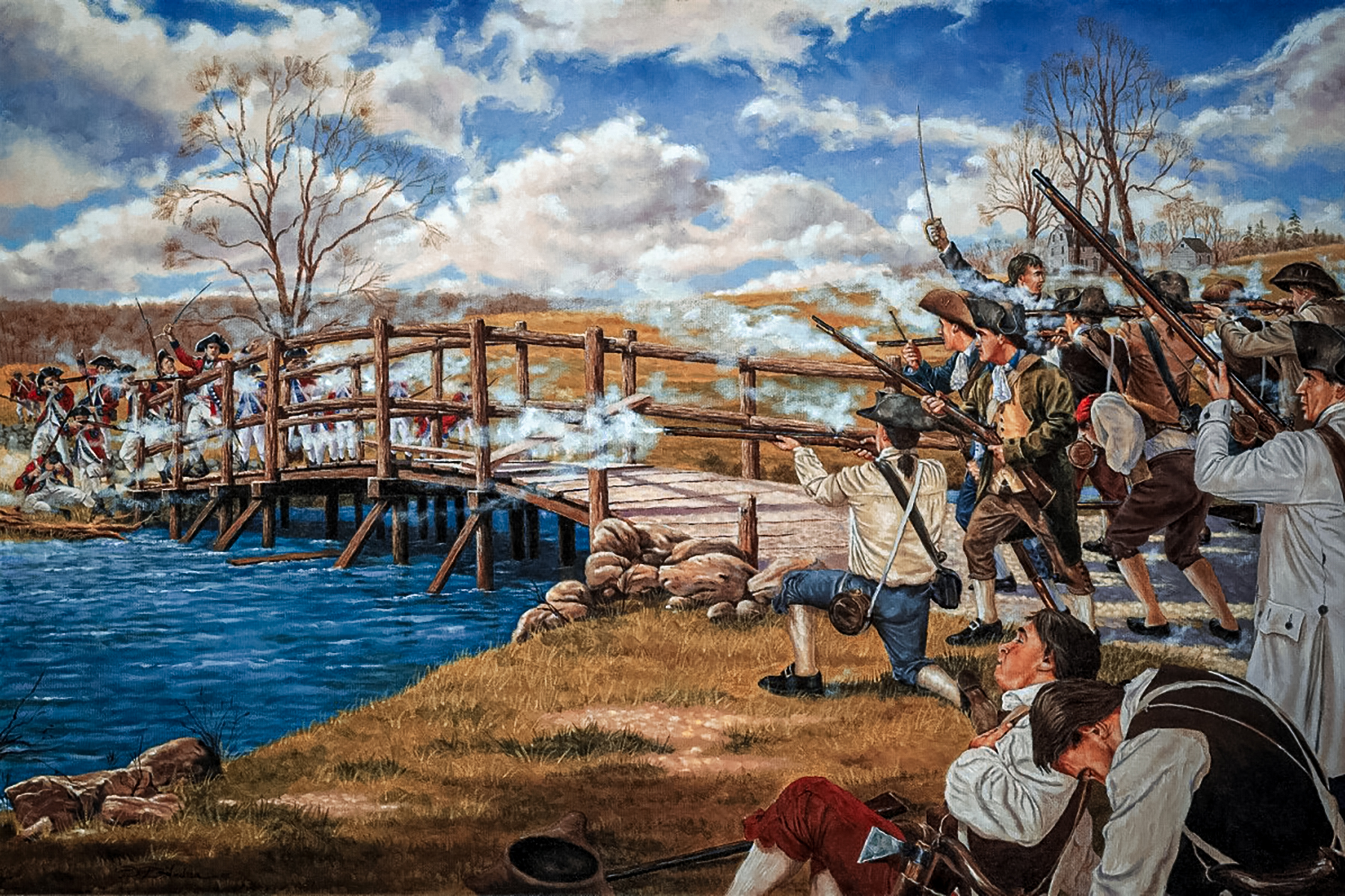
His unit fought in the Battle of Bunker Hill before it became part of the Continental Army. Stark gained fame during the Battle of Bennington in 1777, during which his troops enveloped a British infantry force that included Indians, Tories, and Hessians. While this kind of warfare was unconventional at the time, it doesn’t quite live up to the definition of guerrilla warfare we accept today.
“Most so-called ‘guerrilla’ operations in the war involved forces conducting operations in support of a main army; operations that military writers of the era sometimes called ‘partisan,’” explained Dr. Wayne E. Lee, a Bruce W. Carney distinguished professor at the University of North Carolina at Chapel Hill who specializes in modern military history.
However, their actions were quite different from the partisans in the European theater of World War II, Lee says.
“[Partisans in the American Revolution] were independent units carrying out missions in the vicinity of the main army — indeed, sometimes foraging — but also making it difficult for the enemy to forage,” he said. “True ‘guerrilla’ operations, which is to say, raids from hidden bases against enemy forces without a more formal army anywhere in the vicinity, were rare.”
However, there were some examples of that kind of action, notably the activities of David Fanning, a Loyalist in eastern North Carolina.
“But even [Fannin] had at least a theoretical recourse to the small British garrison in Wilmington,” said Lee. “Operations against Indians were a different matter. Americans did not try to ‘out-guerrilla’ the Indians. They typically went in forces of a size that would be difficult for Indians to confront at all.”
Although Robert Rogers did fight for the British and conducted irregular warfare, it wasn’t to the extent of the Continental forces.
“The British were not prepared to conduct long-distance raids by small corps of the sort that Rogers’ Rangers did, but they had little call for such missions,” Lee said. “They were prepared to fight with light infantry in skirmish order in a rugged environment, but that’s a different animal. That’s battlefield tactics, not guerrilla.”
The Forage War
During the winter of 1777, after the Continental Army’s victory at Trenton in December 1776 during which unconventional tactics common to guerrilla warfare were employed, Continental Army regulars and militia companies from New Jersey and Pennsylvania took part in scouting and harassing operations against the British and German (mostly Hessian) troops quartered in New Jersey.
The American goal was to prevent the British and their allies from obtaining supplies from the countryside, The Continental regulars and militia forces carried out numerous small-scale actions, which included ambushes and raids on British foraging parties.
Although most of the operations were small, a few were much larger, with at least a handful involving more than 1,000 troops.
The Swamp Fox – America’s Patriot Partisan
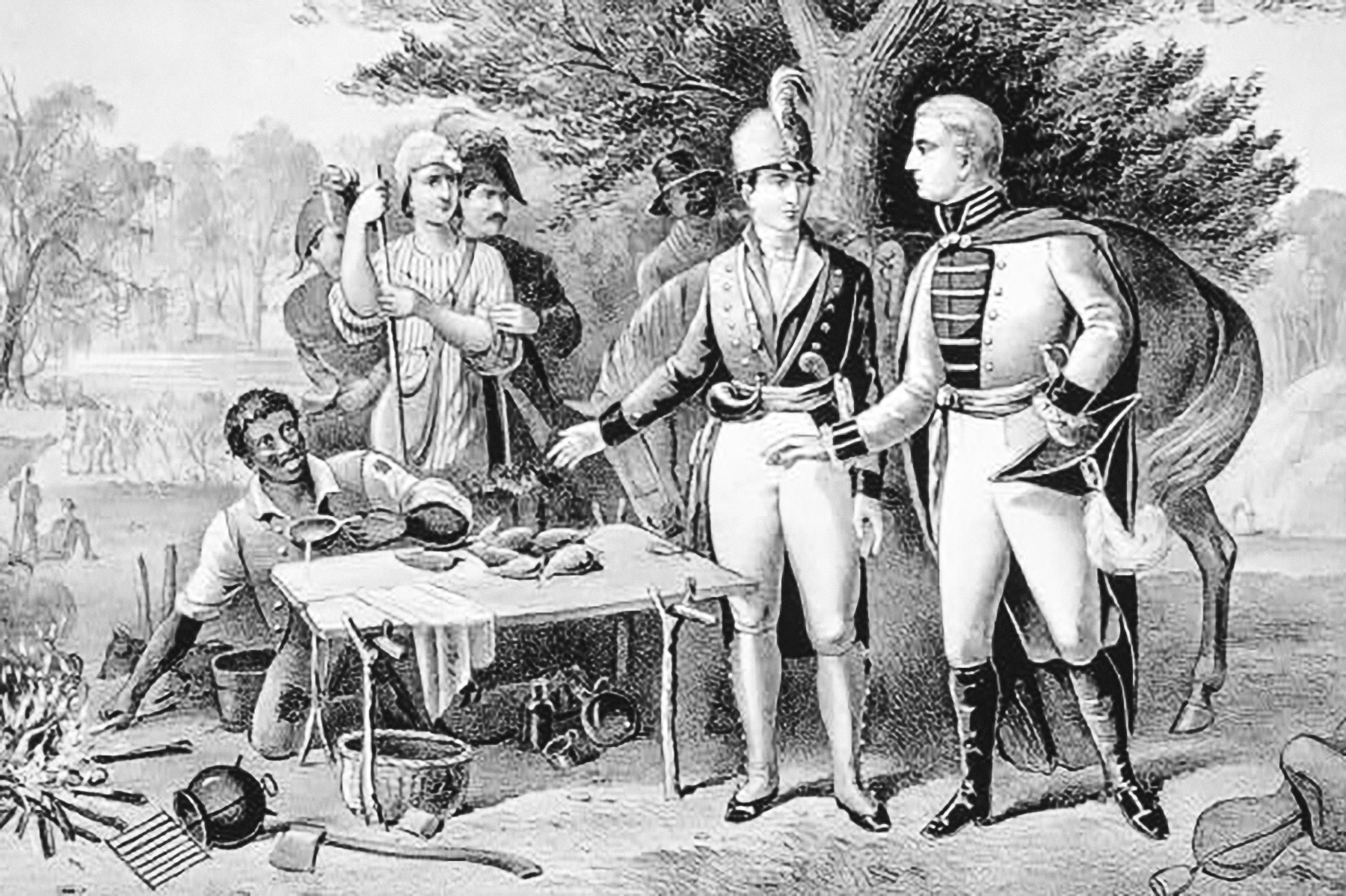
Among the more infamous guerrilla warfare leaders of the era was South Carolina planter turned patriot Francis Marion, who became known as “Swamp Fox.”
A veteran of the French and Indian Wars, he participated in South Carolina’s 1759–61 attacks in Cherokee lands where he witnessed the effectiveness of unorthodox tactics. He was also a student of Maj. Robert Rogers’ 28 Rules of Ranging, which further prepared Marion, whose tactics were truly as cunning as his nickname conveys.
He never commanded a field army or served as a commander in a significant engagement, yet the patriot partisan was promoted to lieutenant colonel in the Continental Army and to brigadier general in the South Carolina Militia. Many of the tactics he devised form a part of the modern-day military doctrine of the U.S. Army’s 75th Ranger Regiment.
Marion didn’t seek to destroy an adversary’s forces, but instead sought to render them unable to fight as an effective and coordinated force.
The Harvard Business Review described his philosophy in detail, “Instead of attacking enemy defense positions, maneuver warfare practitioners [to] bypass those positions, capture the enemy’s command-and-control center in the rear, and cut off supply lines.
Moreover, maneuver warfare doesn’t aim to avoid or resist the uncertainty and disorder that inevitably shape armed conflict; it embraces them as keys to vanquishing the foe.”
He earned the Swamp Fox moniker for his use of the low country wetlands to conceal his movements, and his hit-and-run tactics significantly weakened the British effort. His actions tied down enemy troops and, more importantly, kept the spirit of the Revolution alive in the South.
Marion’s guerrilla warfare tactics are also considered a key factor in the failure of the British southern strategy, which aimed to control the valuable cash crops, including rice, and indigo.
A heavily fictionalized version of the guerrilla war — emphasis on “heavily fictionalized” — is retold in the 2000 film The Patriot starring Mel Gibson, directed by Roland Emmerich.
Guerrilla Warfare at Sea
Guerrilla warfare wasn’t limited to land; the Continental Congress issued “Letters of Marque” to private citizens, making it legal for them to attack and plunder British ships. This was similar to what several European nations did in the Caribbean from the early 16th to the late 18th centuries, where the policies arguably blurred the line with piracy.
Approximately 1,700 Letters of Marque were issued on a pre-voyage basis, and the American privateers were credited with capturing or destroying around 600 British ships. That included the 600-ton, 26-gun armed British ship Julius Caesar. However, the odds were often stacked against the privateers, and many were captured or sunk.
The American privateers aimed to cripple the British economy and to deny the Loyalists resources. According to some estimates, it accounted for around $18 million in damages by the end of the war, or around $350 million in today’s dollars.
Leave a Reply